Category: History


Mesa Verde

Mesa Verde National Park Anna Montgomery

‘What’s she doing?’
‘She’s sketching, she’s an artist.’
old men fondly remember
proper women
telling tales of the War
sons who don’t listen
bemoan generations without values in America

‘Was machst du?’
‘Excuse me, when will
the 10:30 Long House tour return?’
I’m not wearing a park ranger uniform
this happens all the time at Target
I have a customer service face in America

crowds of eager eyes and restless voices
little myth making for me here today
paucity of material
meets 100 degree heat
melting the initiators
global warming’s a gift from America

no room for thought
society’s lost its silence
can’t read Black Zodiac in peace
The Appalachian Book of the Dead
‘Go in fear of abstractions’
Charles Wright was born
in Pickwick Dam, Tennessee
here in America

returning to sketching
I try to make marks
meaningful in my privacy
so awkward with an audience
trespassing at the Ancestral Puebloan site
Utes got a corner, whites got a park
(archaeologists named them Anasazi,
Navajo word for ancient people
or ancient enemy)
method of loci, utterly American

retreat to the car
inner dialogue
(chattering monkeys)
we are having a very disparate
experience of this America

I worry I am a creature made
only for the hearth
open to the vast landscapes
of the mind and nature
so little at home
in this narrow, confounding ‘America’

the breeze soothes
nested in the tail gate
interrupted only by traffic, bird calls
my solace is won, art lives,
making the world real again
escaping America

the mark must be made
it must be fixed
time to draw the line
an infinitely nuanced touch
like the potent power of naming
this line must be drawn
with curves and crooks
from a fleshy hand
New Amsterdam descendent, all American
since 1640 before she had a name
I’m awaiting the alternative reality of America

Notes: Mesa Verde (‘green table’ in Spanish) National Park was the first park founded under the Americans Antiquities Act of 1906 is located in the SW corner of Colorado near the Four Corners area. This is where the state lines of Arizona, Utah, New Mexico and Colorado join. It is on a high stone cliff (7000-8000+ feet in elevation). Long House is on top of Weatherill Mesa and is one of the many sites where the Ancestral Puebloans or Ancient Pueblo Peoples lived between 600AD and 1300AD. The Utes, whose reservation is in the area of Mesa Verde, are not descendants of the Ancient Pueblo Peoples. Anasazi is a Navajo word meaning ‘ancient ones’ or ‘ancient enemies’ an odd choice for archeologists to make, the modern Pueblo Peoples, who claim them as ancestors, prefer the name Ancestral Puebloans.

‘Was machst du?’ is ‘What are you doing?’ in German.

Target is a US corporation: ‘Our mission is to make Target the preferred shopping destination for our guests by delivering outstanding value, continuous innovation and an exceptional guest experience by consistently fulfilling our Expect More. Pay Less.® brand promise. To support our mission, we are guided by our commitments to great value, the community, diversity and the environment.’

The Ute Indian Tribe consists of more than 13 historic groups that included the Capote, Cumumba, Moache, Moanumts, Pah Vant, Parianuche, San Pitch, Sheberetch, Taviwach, Timanogots, Tumpanawach, Uintah, Uncompahgre, White River, Weeminuche, and Yamperika. They were forced out of many areas of the West after the Ute War and now hold the Uintah & Ouray, Southern Ute, and Ute Mountain reservations. Today they are self-governed, ‘domestic dependent nations’, with many sovereign powers retained from the pre-contact period. There are currently 500 tribal governments recognized in America.

Charles Wright is an American poet who won the Pulitzer Prize for Black Zodiac in 1998. ‘Go in fear of abstractions’ is from his The Appalachian Book of the Dead. Pickwick Dam is a hydroelectric dam on the Tennessee River in Hardin County.

New Amsterdam, from 1614-1644 part of the New Netherland Territory, was the settlement that became New York City. It grew up to provide security to the Dutch East India Company’s fur trade (a megacorporation). The land was purchased from the Lenape, Algonquin Native Americans, for 60 guilders. The Lenape tribe mostly ended up forced into the Oklahoma Territory, within the Cherokee Nation, in the 1860s. My ancestors, 11 generations back, Michael Paulus Van Der Voort (later Vanderford) and Marritie Joris Rapalje came to New Amsterdam in 1640. He was from Dermonde, Flanders, Netherlands. I’ve traced most of my ancestors back 10-11 generations to the first immigrants arriving in the 1600s from Scotland, Ireland, England, Wales, Germany, Netherlands, and France.

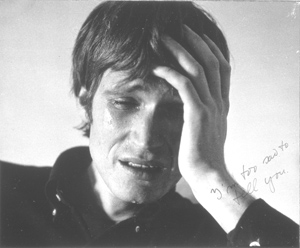
Bas Jan Ader ‘I’m too sad to tell you’

Brutality Between the Lines (<—click to hear the poem read)

“I don’t really like human nature unless…”

requiem for the unsung
Phillip Glass scores
obsessive tracks
drama at river Ouse
mourning, death grimace
cataleptic rigidity
art forms suicide note

Bas Jan Aders
missives of pain
I’m too sad to tell you
broadcast without expatiation
Rothko’s emanating spirituality silences

she fills her overcoat pockets with stones
sexual abuse knocks mental illness
click and add the weight
there are more
you won’t drown with less
art as consoler
doesn’t transform the pain
allures with vows of immortality

Pol Pot slaughtered millions
driving toward the tabula rasa
an entire society stripped
cinematic epic can’t revive
or ferry spirits home
from killing fields
burnishing aesthetic pall

this poem is a postcard
sugared and heating on the stove
thermometer ready
poisonous confection
Helen Chadwick’s golden locks
entwined with sow’s intestine

“You see, I can’t even write this properly.”

Ars memorativa; parlor tricks
trauma plays on the mind
positive bias memory distortion
works its illusions on all:
holocaust survivor
recovering addict
aspiring artist

schema of selective processing
regulates the current state
cooing emotional well-being
smoothes the heinous crimes

stories we tell evolve
voyeuristic titillations for consuming masses
molding the world into utopias of art
ignorant of the price

products worth infinitely more
than the life that birthed them
aftershock of naïveté

Adeline Virginia Stephen had a name before she was
“…all candied over with art.”

Notes: “I don’t really like human nature unless all candied over with art.” Virginia Woolf. “You see, I can’t even write this properly.” is from her suicide note. She drowned in the Ouse River. Bas Jan Aders was lost at sea while performing “In Search of the Miraculous”. His body was never found. Mark Rothko overdosed on antidepressants and slit his wrists. His estate was contested in a 10 year court battle know as the Rothko Case. Helen Chadwick died from a viral infection contracted at the hospital while shooting ‘Unnatural Selection’, a series on IVF embryos rejected for implantation. Killing Fields won 3 Oscars (nominated for 7), 8 BAFTAs (nominated for 13) and grossed $34,609,720 US. Haing Somnang Ngor, who won both the Oscar and BAFTA for his performance, survived the Khmer Rouge only to be murdered in Los Angeles. After the release of The Killing Fields, Ngor had told a New York Times reporter, “If I die from now on, OK! This film will go on for a hundred years.”

Crossing Thresholds

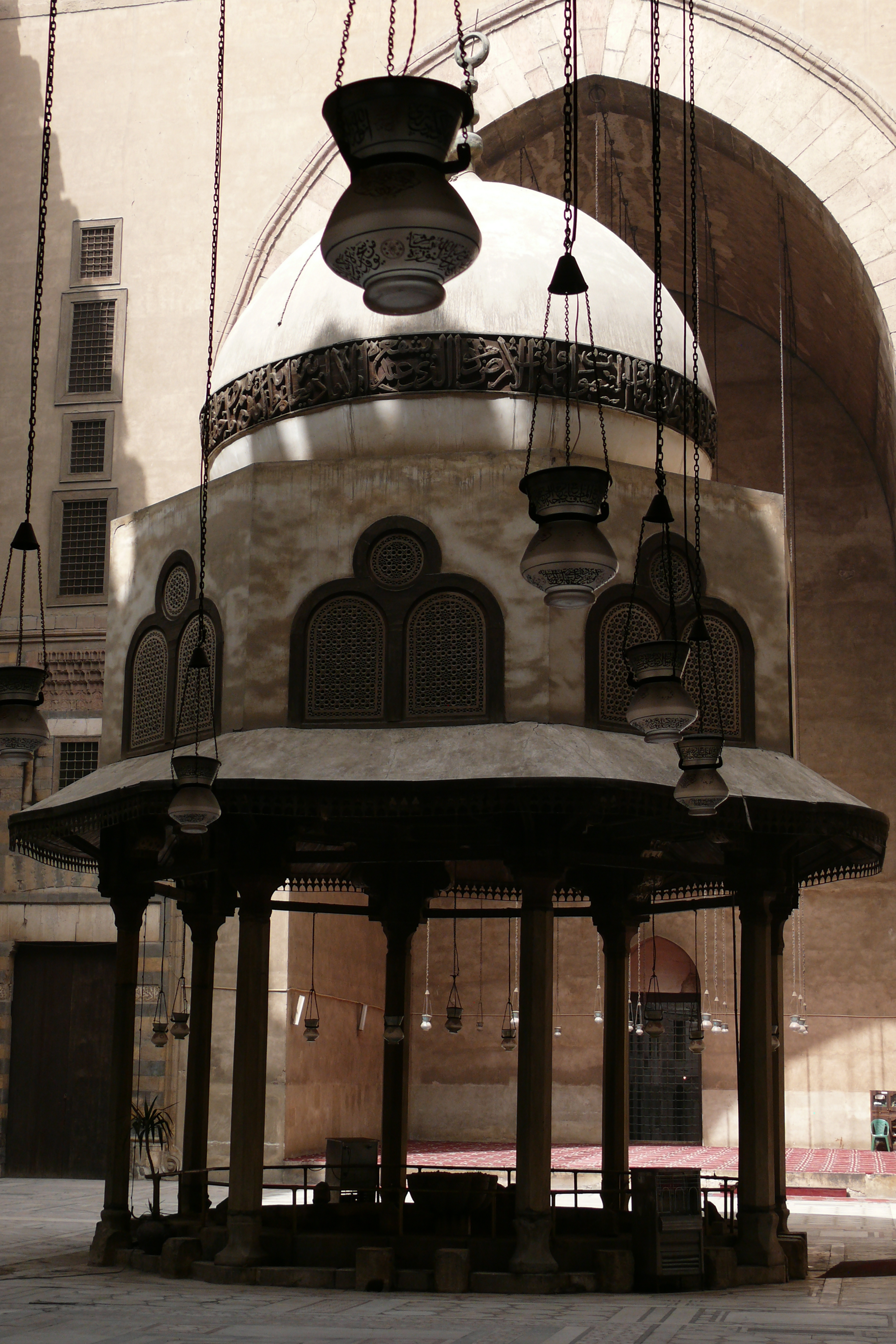
Ibn Tulun Mosque in Cairo photo credit: Anna Montgomery

This is the beginning of the poem I’m currently working on – it may be an epic or a series. I’ll make a new post when it’s complete (with definitions). If you read the beginning of this before you can scroll down to two stanzas above Old Cairo and pick up where you left off.

Crossing Thresholds

By the Citadel

The four centered arch,
pishtaq of the Mosque-Madrassa
of Sultan Hassan
draws me into the broad sehan
a foreigner and trespasser
though invited,
or more appropriately,
a paying guest –
(that only moves under armed guard)
an American woman in Cairo

One hundred degrees
stone radiates from
below my shoeless feet
a heat wave in the winter
that word looses all my associations
it isn’t redefined but obliterated
at home we get eleven feet of snow

Sultan Hassan’s body was never found
he was assassinated by Yalbugha al-‘Umari
the commander in chief of the army
a tale of power and betrayal
the mausoleum serves no purpose

Two minarets, though four were planned,
reach into a pale periwinkle sky
twenty million people peer through
the dust and smog toward the first
great falcon-headed God, Ra
to whom they owe their secret names
an ancient voice chanting creation

The minarets’ spiral staircases
long demolished by Sultan Barquq
to prevent attacks on the Citadel
means the muezzin must use the loud speaker
to broadcast the adhan,
to call all worshippers to prayer

In the dark cool by the praying seat
where no Qur’an rests
he stands beside me
not five feet away

I am in full modesty,
two layers of galabeyas
a tightly pinned navy hijab
covers every strand
of offending blonde hair

Muezzin’s song of praise
(he will not sing the adhan
it is not Friday
we are not Muslims)
is so beautiful I cannot speak

In this exemplar of Mamluk architecture
Ahlus-Sunnah Wa Al-Jama’ah
People of the tradition and the congregation pray
generously containing room
for the four Sunni schools:
Shafi’i, Maliki, Hanafi, and Hanbali
Though through tradition
not room for a single woman

“The best mosques for women
are the inner parts of their houses”
said Mohammad

In America the movement
in mosques is towards “Pray In”
women desegregated,
praying in the main hall

I think about my female rector
in the Episcopal church
in our mountain town
on how the Anglican community
considered separating
from its too liberal cousin
the Episcopal Church of America
over homosexuality and the right
of women to lead services

I ask our Muslim guide, a woman,
Does it hurt, being unwelcome in the house of God?
Baudelaire ringing in my ears:
“I have always been astonished that
women are allowed to enter churches.
What can they have to say to God?”

No, she says,
it is much more convenient
to pray at home.

Glass lanterns adorned with calligraphy
sentries at the sabil,
fountain of ablution
a blue-eyed feminist
searching for meaning in all
this cryptic architecture

It is here, if I were a worshipper,
that I would cleanse my body
of the sand, filth, and oppression
participate in the wudu
the centuries, my inner helix,
resonating with the specters of
the spiral staircases of the minarets
past invisible barriers
to the musalla

Old Cairo

progressing through machine gun
guarded checkpoints at the perimeter
of Old Cairo past the Roman wall
to the Mosque of Ibn Tulun
high on the hill of Gebel Yashkur
the mound of thanksgiving

Here the staircase of the minaret stands
but the sabil is dry
the outer walls osculating
Beit al-Kritliyya joined to Beit Amnabint Salim
now a museum, Gayer Anderson House
named after the British officer
who lived there in the 40s

we enter the sanctity of the private space
through a doorway into a hall
that runs parallel to the street
it then turns ninety degrees so that
none of the interior of the house
can be glimpsed from the street

I have a ticket
I’ve purchased my pass
I didn’t knock three times
but the ghosts could hardly have answered

“enter not the houses other than your own
until you have asked permission
and saluted those within.” Yousef Ali

we proceed through the salamek as guests
the entire house is built from the inside out
so we won’t see the women

though in the courtyard
high above on another floor
is a balcony closet with a window covered
by an elaborate lattice woodwork screen

here is where the women would huddle
to be present without being seen
I squeeze through the tiny doorway
into the little box
and imagine the women whispering
about visitors in the house
how the ghosts have been scandalized

In ‘Till We Have Faces’ C.S. Lewis
argues that we cannot meet the divine
until we have an identity of our own
his heroine struggles to know her worth

worlds and millennia apart
Hatshepsut’s statues defaced
disfigured and buried in a pit
cartouches chiseled away
Pharaoh, yet how dare she claim the right?

we enter a confusion of staircases
that only connect certain floors
I’ve never been so disoriented in a house
so that the women can bring food
to guests and not be seen
keeping the privacy of the family intact

Wasn’t this the perfect set-up
for domestic abuse?
never seen and cannot communicate
then anything can happen
in this protected sanctum
that could’ve been her prison

I think about the lack
of a domestic violence shelter
in Douglas County, the richest and fastest growing
adjacent to our home county
the thinking runs along the lines of
they are wealthy women,
if they need a way out
they can simply buy it
often these women are
the most trapped, disempowered
with no access to the money

shouting behind high gated walls
in the privacy of the inner parts
of their homes


Muezzin’s Song (click to play)
Sabil, fountain of ablution, Mosque-Madrassa of Sultan Hassan photo credit: Anna Montgomery