Category: Art


Austen’s coded statement bridges
Maria to Sterne’s caged starling:
she cannot get out

severe systematic errors of passion’s blur
constructs and deconstructs perplexities
so trembling with sensitive humanity
she thrusts her head through the trellis
in a sentimental journey

encountering order of magnitude problems
myth of Poros, Penia, & Eros
defines aporia, untranslatable
her psychic risk of embodying an artist
this inebriated velleity
invents visual communication

within Kahneman’s maps of bounded rationality
moral heuristics define
representativeness, availability, and anchoring
buried images in etymological adventures
exposing an ultimate paradox of experimental art

potentiality collides with reigning style
hypertext meets the chthonic
in a labyrinth of canonical sources
the trick is on the starling
she wants out while everyone else wants in

Derrida’s post-structuralism
exposes and undermines the oppositions
hierarchies and paradoxes:
signifier/signified; sensible/intelligible;
writing/speech; passivity/activity

liquid modernity’s tentative position
within the cloud construction of identity
she imagines a neutral mode of writing (existing)

photogrammetric parallax architecture
like veridical paradoxes,
congeries of the strange,
her margin notes and shadow expressions
cantos in the wilderness

she demilitarizes the language
scratching photographic emulsions to create
deep image poems, without passage
and inclined to doubt

enunciating aureate specimens
dreamscapes molded from the genome
endolethium enigmas of cryofixation
that freeze all fluid phases solid

ultra-rapid cooling stops
all motion and metabolic activity
initiating protocol that
counters the Leidenfrost Effect,
her emotive vapor blanket slips

diamond knife embedded
in a cryoultramictrotome
(bibliophile’s imaginative invention)
reasons away the horrors of imprisonment
nature of electrons allowing
an intimate picture of nature
in the half-light of her admiration

‘I have borne this poor starling
as a crest to my arms’

husk and kernel unite
unsaying every word
in indented continuations
cave paintings and charcoal outlines
of her same lamentation
all artifacts of the passion:
Kierkegaard’s desire to discover something
that thought itself cannot think


‘We are committed to an unqualified act,
not illustrating outworn myths or contemporary alibis.
One must accept total responsibility for what he executes.
And the measure of his greatness will be the depth
of his insight and courage in realizing his own vision.
Demands for communication are presumptuous and irrelevant.’
– Clyfford Still, Abstract Expressionist Painter

Calligraphic signifiers rouse masterful enumerators
an experiment with a curl of smoke, perhaps . . .
there’s a way to measure time in that

she felt her body astonishingly vague
the wave nature of electrons taking over
words being wind or web
sound and suggestion speared
open . . .
lively and intact in a recurring wave
of arrival.
the soul establishes itself.

language seduces astral bodies,
inscribing their orbits . . .
before one’s shadow ever grew
out of the field into thoughts of tomorrow.
definition of a proper sense of distance –
a dog barking off in the barn, a mystical stroke.

our pellucid order blown apart
in the mysterium tremendum
bouquets of adoration and
certitude unending . . .
to trace you in
the charcoal outlines
of angels
enshroud your song
in rice paper

say that a ballad
wrapped in a ballad,
casting hollow precipices,
jousts firm convictions
underneath the cumulous chatter of troubled skies

I am threshing felicity
for we are language – lost
longing to be free, outside, but we must stay
posing in this place. we must move
as little as possible . . .

we see only postures of the dream,
satiated by pearls of ancient treasure
paths of glacial time pouring over steppes
white irises gleaming on clay surfaces,
pounded stardust on our filigreed emotions

Fuck! I want to be bound by devotion!
Tortured by passion!
in the cavern you understand how
a shadow works
because you’ve brought your own light . . .

free will in blind duel
half-life elements unwinding
earth as thought of the sea
I will dream you.
draw you.

that is the tune but there are no words . . .
The words are only speculation.
(from the Latin speculum, mirror):
they seek and cannot find
the meaning of the music –

I seek shelter along tantalizing downspouts
a tremulous, daring surrender
skin lost borders
merged

traditional imagery fills up
with unfamiliar shadows
(if properly abstract)
the strewn evidence meant something,
the small accidents and pleasures –
something like living occurs, a movement
out of the dream into its codification . . .

how many people came and stayed a certain time,
uttered light or dark speech that became a part of you
filtered and influenced by it, until no part
remains that is surely you
those voices in the dusk –
she meant energy & how in her dream
it came back to her
she hummed her own notes . . .
volumes of secrets to teach
Socrates

the leashed stars kindle thin
perpendicular
clear space of blackness
tiny words of substance cross
the darkness
uniform substance,
a magma of interiors . . .

concede/merge/meld
suck wonder and
lyrical promises amidst this
crumbling compulsion of syllables
float in ephemeral delirium
avidity penultimate in a
fugitive dialogue of masterwork
a desirous, glowing, sensual unraveling

Notes: This is a cento, a poem made up of lines from other poems, like a collage. This piece cheats a bit by using some lines from my own work too. Lines are pulled from John Ashbery’s Self-Portrait in a Convex Mirror, Ray DiPalma’s Rebus Tact, Maureen Owen’s African Sunday, and Susan Howe’s Speeches at the Barriers. Thanks to Samuel Peralta for the nourishing prompt at dVerse Poets Pub.

Boundless Magnolia

Magnolia Blossoms by Anna Montgomery

For Immanuel Kant

I persevere
in this shallow depth of field
art of perception
keeps me anchored,
floating in the halation
of your poetry

in the Japanese tea garden
I traverse the half-moon
bridge to nowhere

sublimity of the formless
blurred image becomes
my method of loci

memories of belonging
to you, to the world
through my embodied perspective
surround me

fingertips trace your shadows
phantoms cast in my peripheral vision
sensitivity amplified
to unbearable heights

all sounds are blown mute

left with complex silence
eidetic imagery of you
like the sun ghost
burning beneath closed lids

ephemeral spaces alight
in the tinted ambiguity
nuances of hue illuminate
this interplay of epiphenomena

as if an absence of psychology is possible

specificity of time and place diffuse
opposites now lose focus through erasure
circle of confusion defines my
travel without passage

aporia breaks the logic of identity
into a deep, silent wonder

no longer aware of my limitations
philosophical puzzles denature
self engulfs grand sensation

I am a boundless magnolia
celestial body, fertile,
[untranslatable]
without a cipher
ever distant/ever close

your immersion ignites
heat flushes my face
a sweet release
mystic union

encountering the limits of language
a border kissing the initiation of bliss
encompassing all, alone/together
as I was then, as I often am
seeing anew:

moral freedom is gained from conquering fear

here lies the hunger and the nourishment
heartbeat within and without
creative impulse and its fruition

I am forever mutable
melting in the presence of beauty

Posted in response to Claudia’s truly inspiring Meeting The Bar prompt on Beautiful Solitude: http://dversepoets.com/2012/09/20/meetingthebar-beautiful-solitude/

‘My gloom will not be illuminated.’
-from a Cherubina de Gabriak poem

in this house under a pear tree
I lay to rest the overheated verses of my youth
dying in exile for anthroposophical views
my threat distilled to these lines upon the page

wondering what unspoken secret carried me here

to the foothills of the West Tian Shan Mountains
Tashkent’s walls overwhelmed by the Lion Chernyayev
and a Russian Orthodox priest clutching his cross
to echo the destruction rained by Gengis Khan

I now know Voloshin’s prison of discovered places

Apollo, you ignited my star
gentle Voloshin brought the offering
playing the trickster to show the world its folly
crafting my identity to fan their imaginations

conflagration as readers melted with love

Gumilyov became obsessed with my creation
wrote intimate letters to my Silver Age image
more suitable for consumption, mirroring male need
my crippled body hobbled the aspirations of my mind

paeans and poetry, a lyre created for Apollon’s honor

Baroness Cherubina birthed and slain
Gabriak defeated in his impish protection
our ruse exposed through crude sexual aggression
Gumilyov’s love burnished to hate

insisting the duel be fought where Pushkin fell

you will not understand that Cherubina
has never been a game for me
Cherubina was my birth, but, alas, it was a stillbirth –
brine blood of my creative endeavor

I buried her in a child’s coffin at Delphi

mysterious and mystical woman
rich, cloistered, fictitious
within her lay the temptations of sin and my voice,
now cloaked as Li Xiang Zi through another’s invention –
to escape the duality, I must always be fluid

Tell me before the last, will my lands be ever conquered, all my treasures plundered?

* This poem is based in the historical duel between Nikolay Gumilyov and Maximilian Voloshin over the imaginary poet Cherubina de Gabriak (pen name of Elisaveta Dmitrieva)

Posted to Open Link Night at the best place for poetry and camaraderie on the web: http://dversepoets.com/2012/09/18/openlinknight-week-62/

Falling Leaves

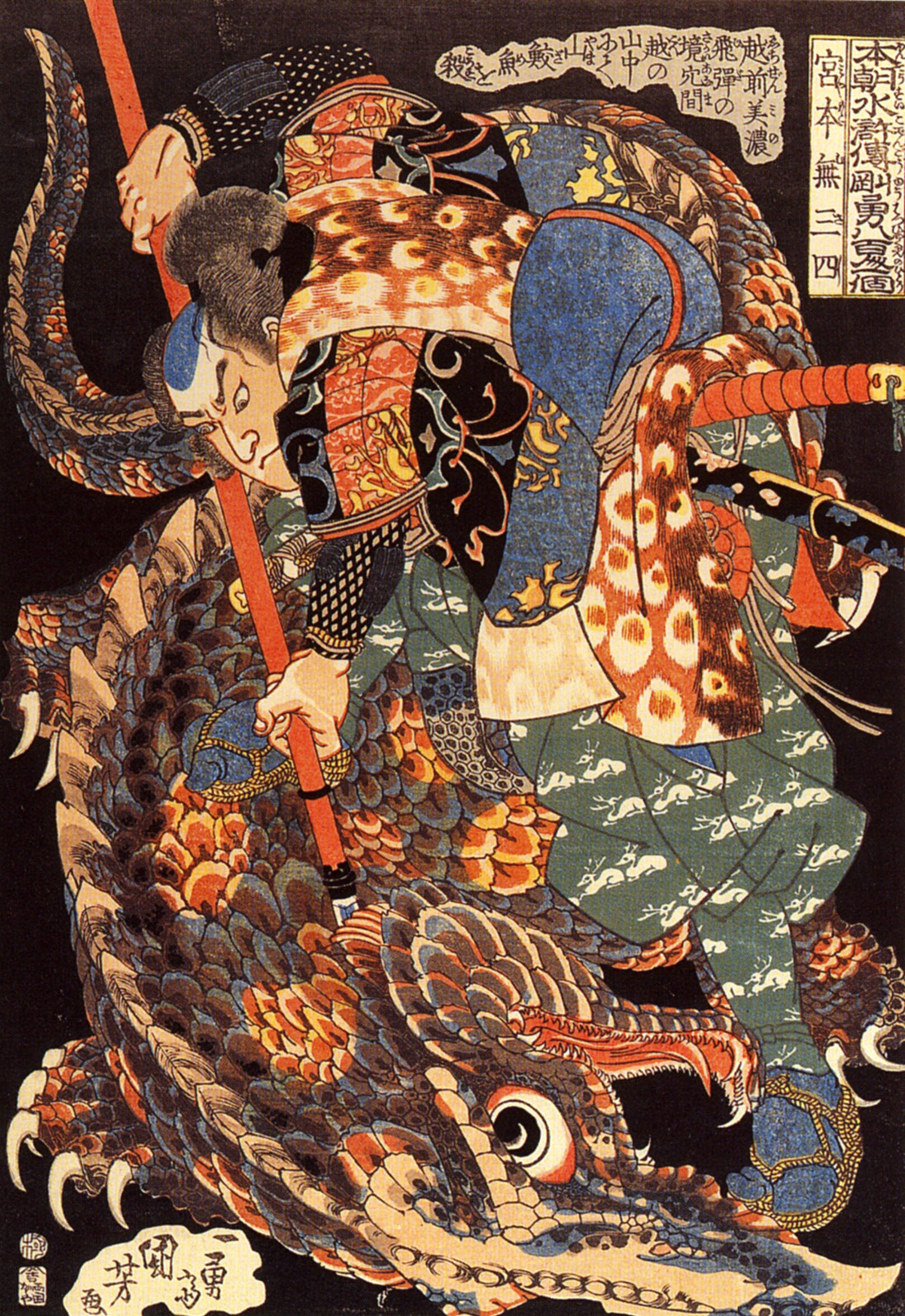
Miyamoto Musashi Killing a Giant Nue by Utagawa Kuniyoshi

‘I have not followed the paths of other men. I have lived without the benefit of a teacher and by my own devices I became master of myself and thereby master of the sword and the brush never differentiating between any of these arts.’ – Musashi (1584-1645), Japanese Kensei, author of the Book of Five Rings

Fierce Shout: Before battle to unsettle the enemy!

Book of Earth

No man is invincible
there is only honor and dishonor,
his death written in the calligraphic ink of his study

Endeavor to know all things
becoming more aware of the world
an essential strategy to defeat the enemy

The work is more important than the worker
you are the spiritual conduit
become one who sees what cannot be seen

Book of Water

All life is the battlefield, focus your intent
the brushstrokes and strikes of practice
are not separate from their execution in life

Man and brush have one purpose
communion with the spirit of the thing, this is the
way of the warrior, sword embodying the soul of the samurai

Be as falling leaves, with no preconceived notions
Stab the heart with your expansive mind
Extend your spirit above the enemy

Fierce Shouts: Each time you strike, to maintain your resoluteness of spirit!

Book of Fire

In mortal combat you must fight to win
mean what you are doing, otherwise
you are performing tricks

Always control the enemy
keep him on the defensive, draw him to you,
be stronger in spirit and resolve

Cross the ravine with the courage of your convictions
impress your attitude upon the world
force imbalance, taking others by surprise

Book of Wind

Clever people do not understand
temperance of spirit, their tricks and false attitudes
are very dangerous to the uninformed mind

Do not be afraid to get in close
attack with power not strength
with quickness not speed

Your attitude at all times is to attack
practice with the spirit of killing the enemy
meditate on this way of strategy

Fierce Shout: In victory to honor the spirit of the thing itself!

Book of Mu (No-Thing)

The spirit of the universe is an emptiness
which is no-thing, man can have no
understanding of this place

Everything is revealed
to all men as they desire it to be revealed,
by their own definitions alone

True no-thing-ness is Mu,
the universe in relation to your art
and your art in relation to the universe

Everything is within, everything exists,
seek nothing outside yourself,
you are the spirit of the thing itself!

Tomb on Mount Iwato

‘With every note
of the mountain temple
sunset bell
sorrow arises as
day turns dark’*

*Japanese Woman Poet,
10th Century

Connected to the best pub on the web for poetic delights: http://dversepoets.com/2012/09/04/open-link-night-week-60/

Divine Game

For Sainkho Namtchylak and Claudia Schoenfeld

Experimenting mystic
at the junction of Cyberia’s culture
two notes/one sound
imitating nature’s call
Tuvan Khöömei youth
encounters Soviet Union
classical music education
creating a Lamaist jazz mantra:
I am the shaman of my life

rumbling spirit timbre emotes
through a seven octave range
the space of meaning and feelings
beat drives the insistent vocalizations
like wind echoing in Artic skies
forming the transformative art
of an intoned sense

groaning, guttural sound
grandmother city dweller
revisits the tundra of childhood
‘tender bird of timelessness
touches me with her wing’
intuiting secret sounds
that would not be taught
‘hidden chords of thought’
woman on the outside
even when looking within

bodhisattva cries as
‘my sleeping pulse awakens,
trembles in front of my eyes’
how can I keep from singing
resonating frequencies that pierce
illusory aspects of the self?
‘artificial addendum of the human voice’
making sense in this divine game

‘aural quintessence of the spiritual world’
giving voice to the sacred fire
developing the capacity to imagine
fullness arises from emptiness as
‘absolute harmony is born into silence’

*All quotes are Sainkho Namtchylak’s; Cyberia is the name of one of her albums

I find myself in a rage

Inhabiting the mythical sincerity
of a murdered poet (run over & over),
once seen as calculating and insincere

like a youth who doesn’t know anything about himself

Sides with the party but isn’t a member,
posits policemen are the true proletariat –
haunted by a father who saved Mussolini

except that he is new and rants against the old world.

Tries to express the viewpoint of the believer –
finds it hard to escape the self reflection
of the inner bourgeoisie, really, who wouldn’t?

Buys a castle in Viterbo, north of Rome,
illuminating the coprophagia of consumerism
in a film based on Sade’s 120 journées

I don’t hide this state of mine:

Poetry reduces to defense, compromise,
renunciation, naïveté that shrivels prestige –
how much reality can there be?

I never have peace, ever.*

* Pier Paolo Pasolini (Director, Poet, Philosopher)

je suis diaphane

‘brought into being by nothing other than the look’*
using poetry to stitch the seams, painting them with vitreous enamel
burnishing golden orbs of beauty, enhancing the visual field
to make the world seem habitable
inherently empathetic to human existence
when does the illusion, this disembodied utterance,
enter firmly into the realm of futility?

jamais vu à travers

philosophical argument merely hints at a promise of liberty
floating upon the surface of psychological experience
a convincing conundrum that won’t unlock
inner barriers to designing boundaries of self-definition
societal viewing provides ample opportunities
to manifest cognitive dissonance, reinforcing the brute
that omniscient spectator-god within the man

emmuré dans ce paradoxe

feminine artistry is required to remain comfortably incarcerated
chaos churns with near indomitable force
why fight when you are forever outnumbered?
control may simply be a part of the disease
disempowering internalization of the oppressor’s abuse
replaying his semiotic position as the maker of meaning
whom I know is never she, never me

une illusion, un fantasme masculin

called into existence through the male gaze, the internalized observer,
objectified and exploited by possession and protection
filming my every move in art house cinematic style
encircled in an ouroboros of scopophilia
blinded to feminist themes, it traps what’s possible
entangling these hands, bloodied with struggle
incapable now of creating and preserving identity

une créature spécieuse, chose éphémère

scraping molded forms to sharpen focus
no spiritual value arising from inherent worth
only sculpting my usefulness in a deterministic role
voyeur’s fantasy allays the weight of moral consequences
fixing upon the screen the sanctioned story
i am a dissociated, breathing pleasure toy, imaginary signifier,
an unintentional participant living in a heightened state of unreality

Notes: *Christian Metz, French film theorist

Scopophilia or scoptophilia, from Greek “love of looking”, is deriving pleasure from looking. As an expression of sexuality, it refers to sexual pleasure derived from looking at erotic objects: erotic photographs, pornography, naked bodies, etc. It can also be described as intermittent desire of gazing at. Alternatively, this term was used by cinema psychoanalysts of the 1970s to describe pleasures (often considered pathological) and other unconscious processes occurring in spectators when they watch films. The term was borrowed from psychoanalytic theories of Jacques Lacan and Otto Fenichel. Critical race theorists, such as Bell Hooks, David Marriott, and Shannon Winnubst, have also taken up scoptophilia and the scopic drive as a mechanism to describe racial othering.

French translation: I am diaphanous/forever seen through/immured in this paradox/an illusion, a male fantasy/a specious creature, ephemeral thing

Reposted with notes and additional material for Karin’s French Poetics Prompt at dVerse Poets Pub http://dversepoets.com/2012/07/14/poetics-a-french-twist-for-quatorze-juillet/

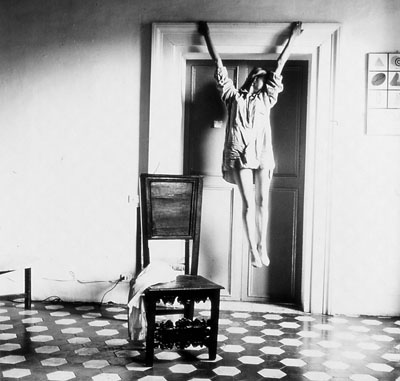
Series of Exceptions

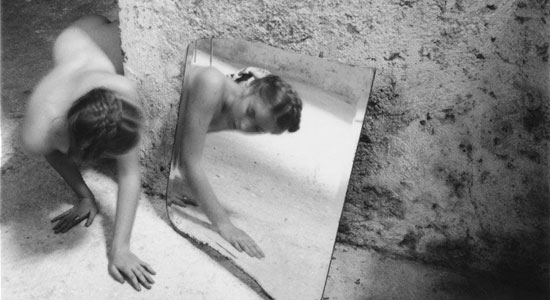
for Francesca Woodman

medium format intimacy
10,000 negatives survive
120 culled for display
30 years after the suicide:

Self Deceit #1

another year of dishonesty
psychic risk of embodying an artist
your face was unidentifiable
a persona defenestration

rewind from tragedy
address the art (she would prefer it)
pernicious action you presaged had
‘nothing to do with melodrama’

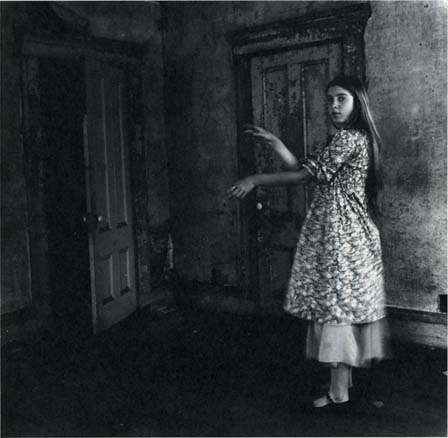
Francesca as Alice

delicate, fragile interior
probed by a functioning interrogator
superego peering in from the edges
(who exactly obliterated you?)

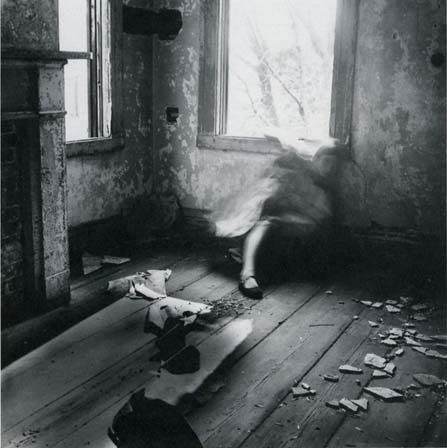
Francesca Woodman

you invented a visual language where
clothes pins pinch flesh,
wallpaper camouflages or liberates,
women unbutton identity

‘I am floating in plasma…
I am so vain…
I was (I am?) not unique but special
This is why I was an artist’

Sloan as Francesca’s Doppleganger

Quotes are from Francesca Woodman’s journals and letters

Linked to Poetics at dVerse http://dversepoets.com/2012/06/30/poetics-button-button/

The Collector

Wagstaff and Mapplethorpe

Sam’s repeating Purgatory, enacting a self-assassination in American silver
Repeating his regression, photography collector to curator (debonair style cast)
Purgatory regression as he confronts personas, morphs 1970s to 1980s

Enacting photography he examines dark contrast: art, his sexuality, death
A collector confronts dark ecstasy, voyeuristic demi-gods creating visages
Self to personas contrast: voyeuristic beau-monde, pornographic trends override
Assassination curator morphs art, demi-monde, drug culture, Mapplethorpe lovers

In debonair 1970s his gods: pornographic culture, cigarettes, photographs, positing
American style to sexuality, creating trends, Mapplethorpe photographs exuding possession
Silver cast 1980s, death visages override lovers, positing possession matters

Notes:

This is a 10X10 matrix (after Lewis Carroll) inspired by the Form for All challenge at dVerse. The connecting point happened during the documentary film Black White + Gray when it is mentioned that Sam Wagstaff collected photographs taken by Lewis Carroll.

Samuel Jones Wagstaff Jr. (4 November 1921 – 14 January 1987) was an American art curator and collector as well as the artistic mentor and benefactor of photographer Robert Mapplethorpe (who was also his lifetime companion) and poet-punk rocker Patti Smith. Wagstaff was known in part for his support of Minimalism, Pop Art, Conceptual Art and Earthworks, but his aesthetic acceptance and support of photography presaged the acceptance of the medium as a fine art. After selling his collection of photographs in the 1980s he, surprisingly, began collecting American silver. Wagstaff died of pneumonia arising from AIDS at his home in Manhattan on January 14, 1987, two years before Mapplethorpe. – Wikipedia